
 Publish:2025-12-19
 Source:ReedBiotech
 Views:1182
In ELISA experiments, the sufficient lysis of tissue samples and protein extraction are crucial steps determining the success of the experiment. Today, we will share the detailed operating conditions and precautions for several mainstream lysis methods.
Liquid Nitrogen Grinding Method
Application: All tissue types, especially tough tissues (muscle, skin, tumor)
Operating Conditions:
Rinse the tissue with pre-cooled PBS (0.01M, pH=7.4) to remove residual blood. After weighing, cut the tissue into small pieces (2-3mm in size, not too large). Place the tissue pieces into a mortar, pour in a sufficient amount of liquid nitrogen to soak them, and quickly grind vigorously when the liquid nitrogen has not completely volatilized until a fine powder is obtained. Generally, add PBS at a weight-to-volume ratio of 1:9 (e.g., 9mL of PBS for 1g of tissue sample), then repeatedly pipette and mix thoroughly until completely dissolved.
Tips:
- The mortar must be pre-cooled to prevent tissue thawing.
- Wear frost-resistant gloves and goggles during all operations.
- PBS must be pre-cooled at 4°C in advance and supplemented with protease inhibitors.
Cryogenic Grinder Method
Application: All tissue types; high-throughput sample processing
Operating Conditions:
Turn on the cryogenic grinder in advance for pre-cooling. Rinse the tissue with pre-cooled PBS (0.01M, pH=7.4) to remove residual blood. After weighing, cut the tissue into small pieces, aliquot into 2mL centrifuge tubes, and add 2 pieces of 4mm magnetic beads. Set the grinding parameters to 60Hz frequency and grind for 45 seconds; if grinding is insufficient, repeat 1-2 times.
Tips:
- Use special low-temperature resistant centrifuge tubes.
- Select the size of magnetic beads according to the tissue quantity.
- Avoid excessive grinding that generates heat; interval cooling is important.
Ultrasonic Lysis Method
Application: Secondary lysis of soft tissues (liver, brain, kidney) or cell samples.
Operating Conditions:
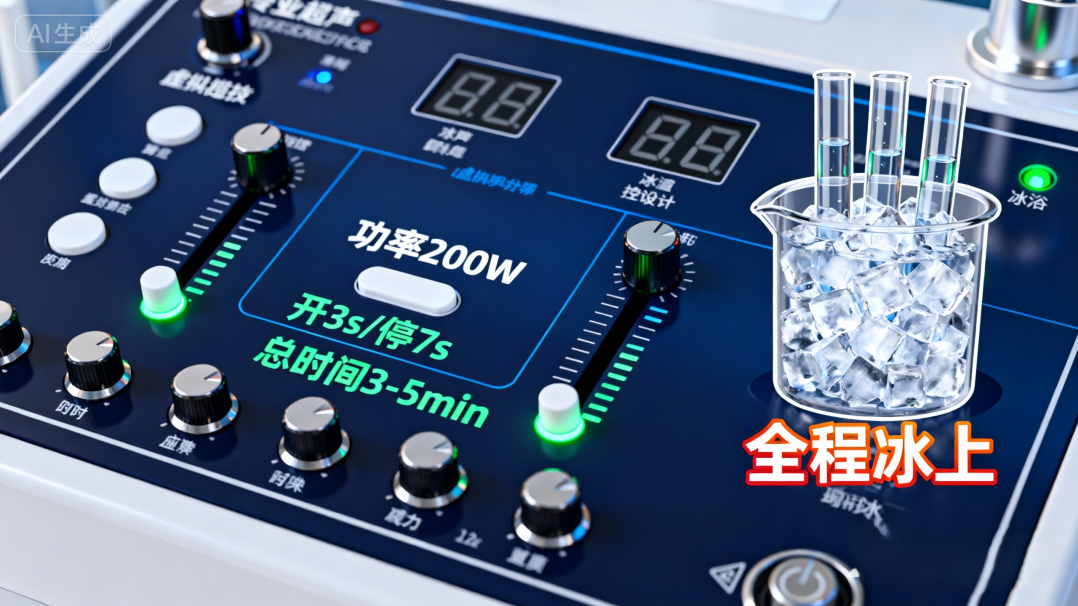
After cutting the tissue into small pieces, add PBS to prepare a crude homogenate. Set the ultrasonic power to 200W (or 25% of the maximum power of the instrument), with a cycle of 3 seconds on and 7 seconds off, for a total time of 3-5 minutes. Perform the entire operation on ice or in an ice bath to prevent overheating.
Tips:
- Do not let the probe touch the tube wall to avoid bubble generation.
- Ensure cooling on ice during ultrasonic intervals.
- High power and prolonged ultrasonication can cause protein denaturation.
Repeated Freeze-Thaw Method
Application: Cell samples.
Operating Conditions:
Place the cell suspension in a -80°C refrigerator for 1 hour or in liquid nitrogen for 0.5 hours, then transfer to a 30°C water bath and gently oscillate to thaw rapidly. Repeat this operation 1-2 times.
Tips:
- Excessive freeze-thaw cycles can activate proteases, leading to protein degradation.
- Thoroughly mix after thawing.
- Lysis efficiency is low; not recommended for tough tissues.
- If the effect is unsatisfactory, supplementary ultrasonic treatment is recommended.
General Key Parameters
1. Centrifugation Parameters
- Speed: 1500×g
- Time: 10-15 minutes
- Temperature: 2-8°C
2. Sample Storage
- Aliquoting: Aliquot the extracted supernatant according to single-use volume.
- Storage temperature: -80°C for long-term storage.
- Avoid repeated freeze-thaw cycles.
The value of experimental tips lies in practical application. Hope the content shared today can help you avoid detours. However, each tissue has its "characteristics" and each protein has its "personality". Literature parameters are only a starting point. The real "gold standard" for your experiment needs to be adjusted and verified in practice.