
 Publish:2025-12-05
 Source:ReedBiotech
 Views:2064
Plant hormones are trace organic compounds synthesized in plants that exert significant regulatory effects on plant growth and development. Currently, six major classes of plant hormones have been identified in plants: Auxin, Gibberellic Acid (GA), Cytokinin (CTK), Abscisic Acid (ABA), Ethylene (ETH), and Brassinosteroids (BR). These hormones can directly impact crop yield by regulating processes such as crop growth and development, and indirectly reduce yield losses by enhancing crop adaptability to various adverse conditions. Research findings related to plant hormones have revolutionized crop yield improvement and hold substantial agricultural application value. Consequently, the accurate determination of plant hormone contents in plants has garnered increasing attention.

Figure 1 Regulation of Plant Growth and Development by Plant Hormones
Due to the extremely low content of plant hormones in vivo, their unstable nature, and susceptibility to interference from other secondary metabolites, coupled with the rarity and limited quantity of plant mutant materials used in plant physiology research, the trace nature, dynamic characteristics of plant hormones, and the complexity of detection technologies necessitate high-throughput detection methods. Therefore, detection methods must meet requirements such as strong specificity, simple operation, suitability for high-throughput analysis, and low detection costs. Conventional chromatographic and mass spectrometric methods (e.g., LC-MS, HPLC) offer high sensitivity (ng/g level) and recovery rates (up to 95%), but they present significant limitations:
1. Complex sample pretreatment requiring organic solvents for separation and extraction;
2. High professional expertise required for instrumental operation and subsequent data analysis, making them inaccessible to ordinary researchers;
3. High costs associated with testing, instrument procurement, and maintenance, which are unaffordable for most laboratories.
Researchers have thus turned to immunological methods such as ELISA and IR. Compared to chromatographic/mass spectrometric techniques, immunological methods feature simplified sample preparation. For example, ELISA only requires simple homogenization in pH=7.4 PBS for sample loading. The "user-friendly" operation of ELISA kits, which requires no prior knowledge of the underlying principles (only strict adherence to experimental procedures), is far more accessible. Additionally, unlike mass spectrometers that cost hundreds of thousands to millions of yuan, ELISA kits only require a microplate reader priced between RMB20,000 to RMB50,000, offering significant cost advantages.
|
Parameter |
HPLC |
ELISA |
|
Sample Pretreatment Reagents |
Acetonitrile, methanol, ethyl acetate, etc. |
PBS |
|
Sample Pretreatment Time |
30-60 minutes |
5 minutes |
|
Detection Time (from loading to results) |
30-60 minutes |
75 minutes |
|
Detection Principle |
Chromatographic separation |
Competitive ELISA |
|
Data Processing |
External or internal standard quantification |
Four-parameter logistic fitting |
|
Sensitivity Range |
0.06-20 ng/mL |
0.09-6.39 ng/mL (sensitivity of our plant ELISA) |
|
Single-Run Sample Capacity |
20-40 samples |
150-300 samples (using 2-3 96T ELISA kits simultaneously) |
|
Cost per Test |
100-200 RMB/sample |
15 RMB/sample |
|
Instrument Cost |
500,000-2,000,000 RMB |
20,000-50,000 RMB |
Table 1 Comparison of Plant Hormone Determination Methods (HPLC vs. ELISA)
Reed Biotech's newly launched plant ELISA product series adopts the competitive ELISA principle. Conjugates of plant hormones (e.g., ABA) and carrier proteins (BSA) (ABA-BSA) are coated onto solid-phase microplates. Simultaneously, test samples and biotinylated ABA monoclonal antibodies (Bio-Ab) are added. Free ABA in the samples competes with solid-phase ABA for binding to the monoclonal antibodies. Unbound components are removed by washing, followed by the addition of horseradish peroxidase (HRP)-labeled streptavidin (SA-HRP). Biotin specifically binds to streptavidin, forming immune complexes (Ab-Bio-SA-HRP), and unbound substances are washed away. The chromogenic substrate (TMB) is then added; TMB turns blue under the catalysis of HRP and changes to yellow after the addition of stop solution. The absorbance (OD value) is measured at 450 nm using a microplate reader. ABA concentration is inversely proportional to the OD450 value, and the ABA concentration in samples is calculated by plotting a standard curve. The entire experiment can be performed at room temperature (25±3℃).
Faster and Simpler Experiments
To enhance user convenience, we have developed a room-temperature reaction system requiring only incubation at ambient temperature (25±3℃). The entire experiment can be completed in just 75 minutes.
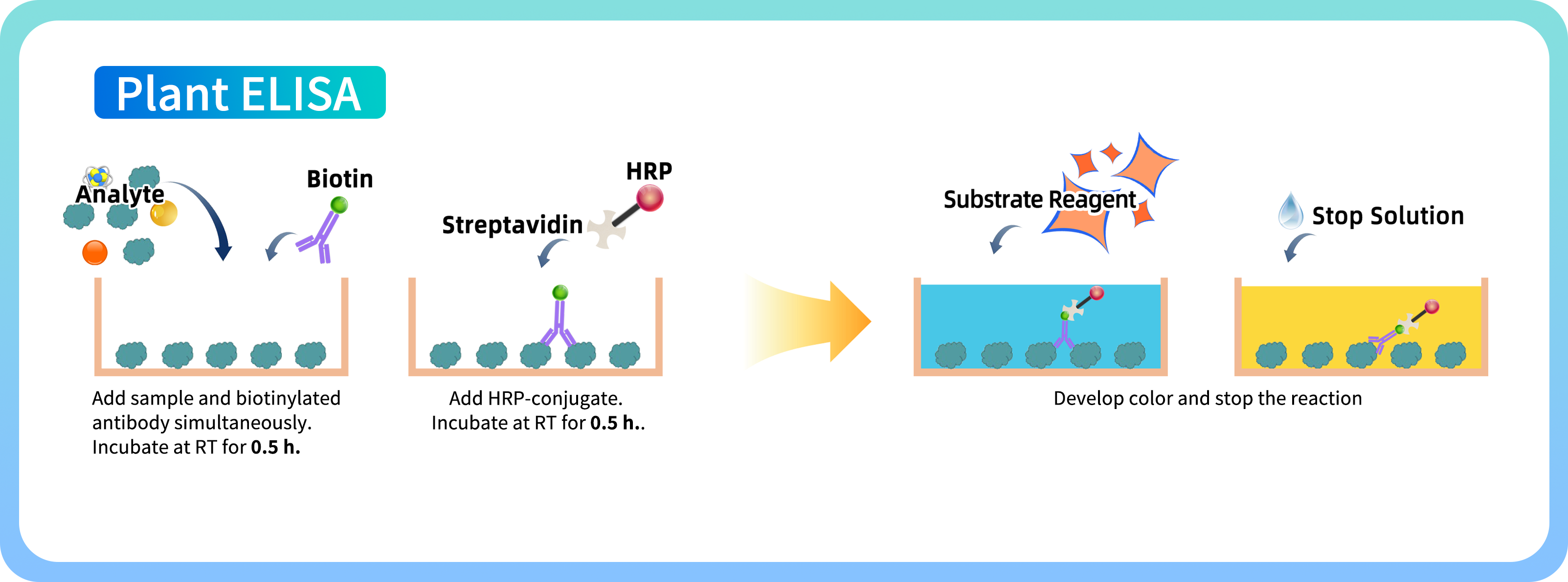
Figure 2 Plant ELISA Experimental Procedure
Higher Sample Detection Rate
Addressing user concerns about sample detectability, we conducted extensive tests on common crop and fruit samples, achieving a 100% detection rate.

Figure 3 ABA Content Determination in Different Plant Samples
Superior Sensitivity
Our products demonstrate leading sensitivity among peer offerings at all levels.
|
Company |
Detection Range |
Time |
Temperature |
Method |
|
REED |
0.2-16.2 ng/mL |
75 min |
RT |
Two-step Competitive ELISA |
|
A |
1.57-100 ng/mL |
140 min |
37℃ |
Two-step Competitive ELISA |
|
B |
0.15-10 μg/mL |
80 min |
37℃ |
Two-step Competitive ELISA |
|
C |
1.23-100 ng/mL |
105 min |
37℃ |
Two-step Competitive ELISA |
Table 2 Statistical Parameters of Competitive Plant ABA ELISA Kits from Peer Companies
Simplified Sample Pretreatment
No need for reagents such as acetonitrile, methanol, or ethyl acetate, nor for extraction, rotary evaporation, or nitrogen blowing. Only simple homogenization in PBS is required.
More Stable Kits
Accelerated stability tests were conducted at 20℃ and 37℃, showing no significant differences compared to storage at -20℃ or 4℃.
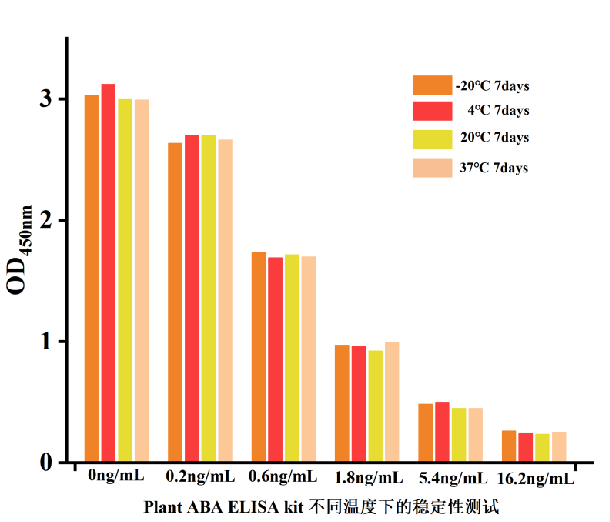
Figure 4 High-Temperature Accelerated Stability Test of Plant ABA ELISA Kit
Partial Product Catalog of Reed Biotech Plant ELISA Kits
|
Catalog No. |
Product Name |
Method |
Detection Range |
Sensitivity |
Detection Time |
Specification |
|
RE10300 |
Abscisic Acid (ABA) |
Competitive ELISA |
0.2-16.2 ng/mL |
0.09 ng/mL |
75 min |
48T/96T |
|
RE10301 |
Salicylic Acid (SA) |
Competitive ELISA |
20-1620 ng/mL |
6.39 ng/mL |
75 min |
48T/96T |
|
RE10302 |
Gibberellic Acid (GA) |
Competitive ELISA |
0.5-40.5 ng/mL |
0.18 ng/mL |
75 min |
48T/96T |
|
RE10303 |
Jasmonic Acid (JA) |
Competitive ELISA |
0.6-48.6 ng/mL |
0.25 ng/mL |
75 min |
48T/96T |